Emotion X-Ray
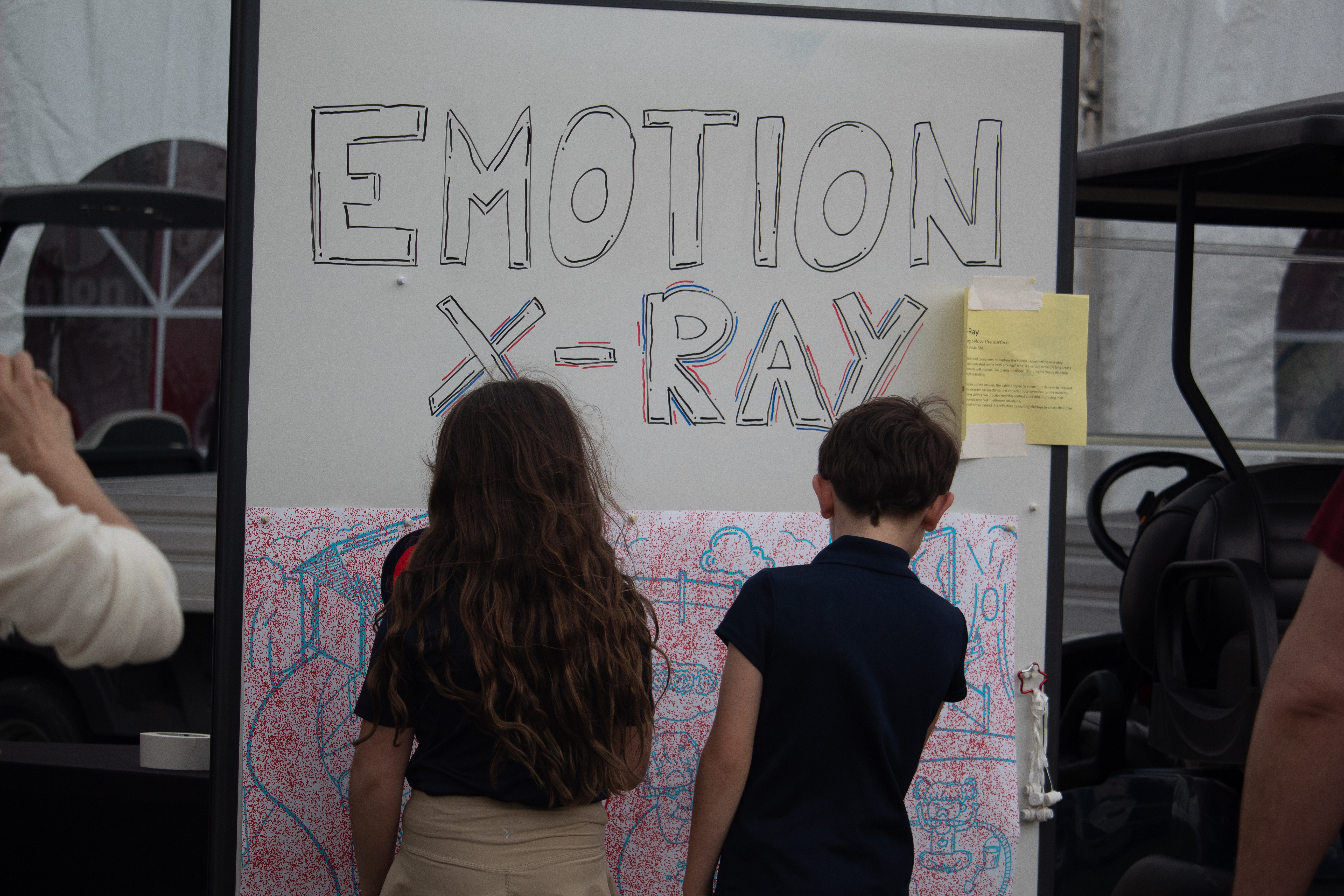
A hands-on museum exhibit that teaches children social awareness by showing how emotions are shaped by hidden causes - not just how someone looks, but what happened to them. Using a red "x-ray" lens, visitors scan a large illustrated playground scene to uncover concealed contexts behind each character's feelings.
Understanding how children interpret emotions
We began by surveying 15 papers on social-emotional learning and informal museum education. The evidence was consistent: children build SEL skills through doing, not through explanation - and museum environments that encourage open exploration support this best. But existing children's exhibits rarely went beyond naming emotions to exploring their causes.
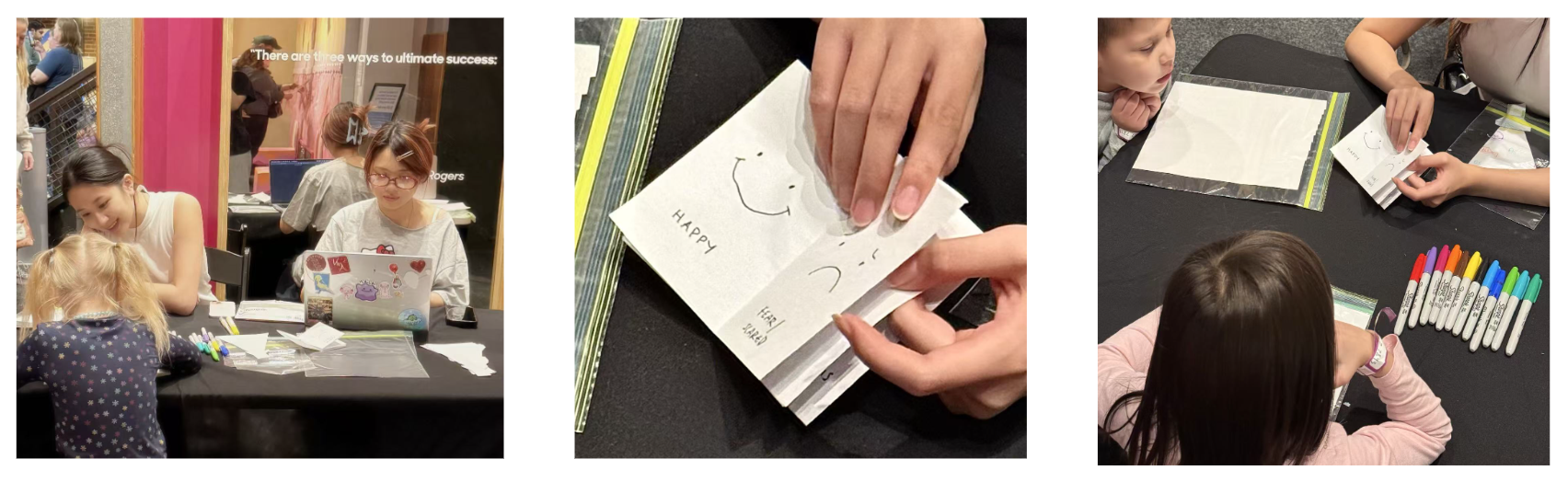
To ground our design in observed behavior, we ran a design probe - a conversational drawing activity we called the Emotion Flashlight - with 8 children (ages 4–10) in a museum setting. Each child was given drawing materials and asked to depict different emotions, while we observed and recorded how they expressed and explained feelings.
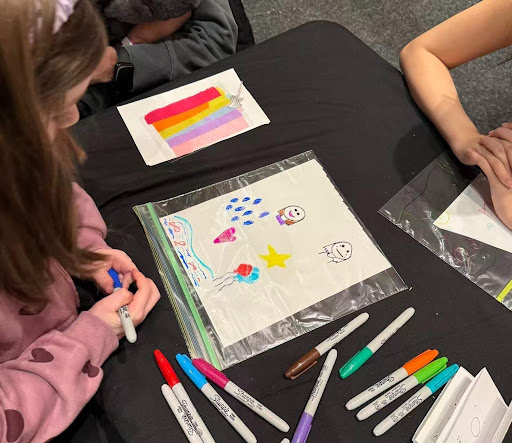
Emotion Flashlight design probe: children drew and narrated feelings using colors, symbols, and personal stories.
What we found
Children express emotions visually, not verbally
Most children used colors, symbols, and drawings to differentiate emotions rather than words. Hearts for happy, rain for sad - visual languages that revealed rich emotional understanding.
Emotions are anchored to personal experiences
Children connected emotions to concrete events - pets, school, weather, family. Abstract definitions meant little. The more personally relevant the prompt, the deeper the engagement.
Caregiver scaffolding is essential for younger children
Younger children often understood emotions nonverbally before they could articulate them. Parents extended and translated these nonverbal cues into language, making caregiver participation a core feature of the experience.
Children rarely questioned positive emotions
When a character looked happy, children accepted it at face value. But negative emotions prompted deeper questioning - "why is she sad?" This asymmetry shaped our core design direction: reveal the hidden why behind feelings, not just the feeling itself.
Three directions, one big idea
Our research pointed toward a single design direction: create a physical, hands-on experience where hidden emotional contexts are uncovered through exploration. We developed three early concepts before converging on the x-ray mechanic.
Visitor journey storyboard
We mapped the full arc of how a visitor would move through the exhibit - from first noticing the scribble-covered wall, to taking something home.
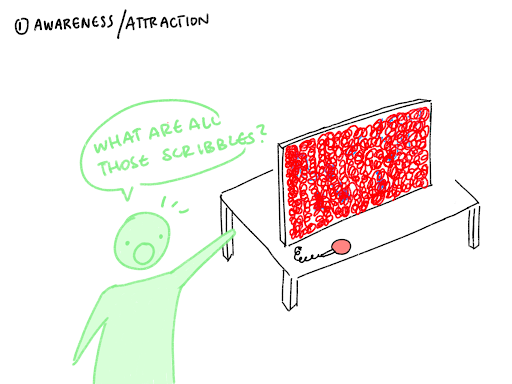
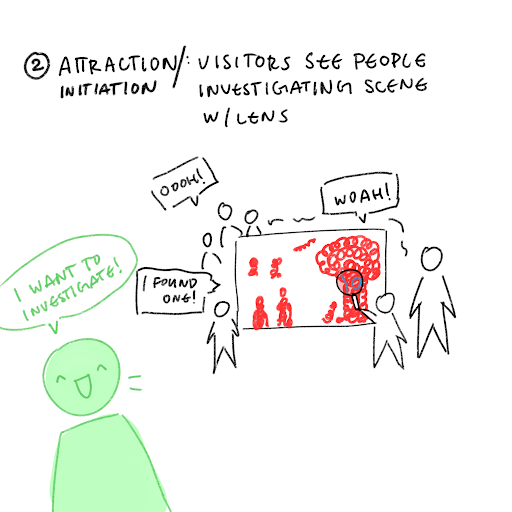
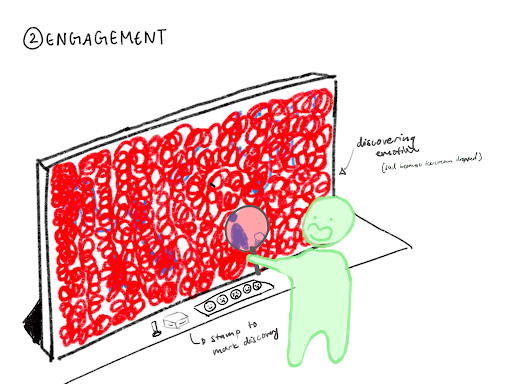
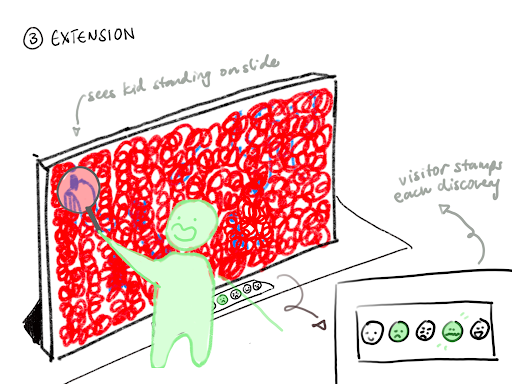
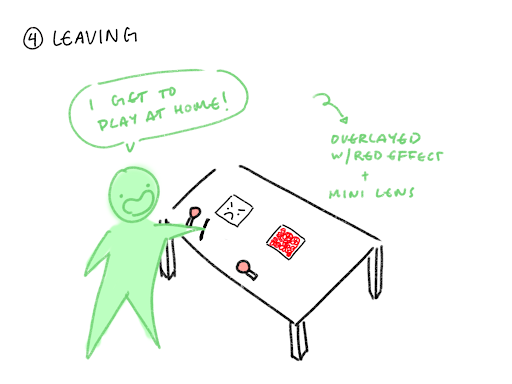
Visitor journey: Awareness → Initiation → Engagement → Extension → Leaving.
Rotating face panels
A vertical board with three rotating wheels for facial features - eyes, eyebrows, mouth. Visitors mix and match to explore how different combinations communicate different emotions, learning that subtle changes in expression carry meaning.
Speaking tube stations
Two stations connected by speaking tubes. One person sends an emotion through tone and voice alone; the other listens and interprets. The focus shifts from visual to auditory - practicing a different channel of emotional communication.
Lens that reveals hidden context
A large illustrated scene covered by a scribble layer. A physical red lens reveals hidden scenes beneath - moments that explain why characters feel the way they do. This concept directly addressed our core finding: children need to see the cause to reason about emotion.
A cohesive experience built around discovery
The final exhibit centers on a large illustrated playground scene - full of characters in the middle of social situations. The entire scene is covered by a red scribble overlay, hiding the emotional context beneath. Visitors receive a handheld red x-ray lens and scan the board to uncover hidden scenes: a child who dropped their lunch, a dog who ran away, a birthday surprise in progress.
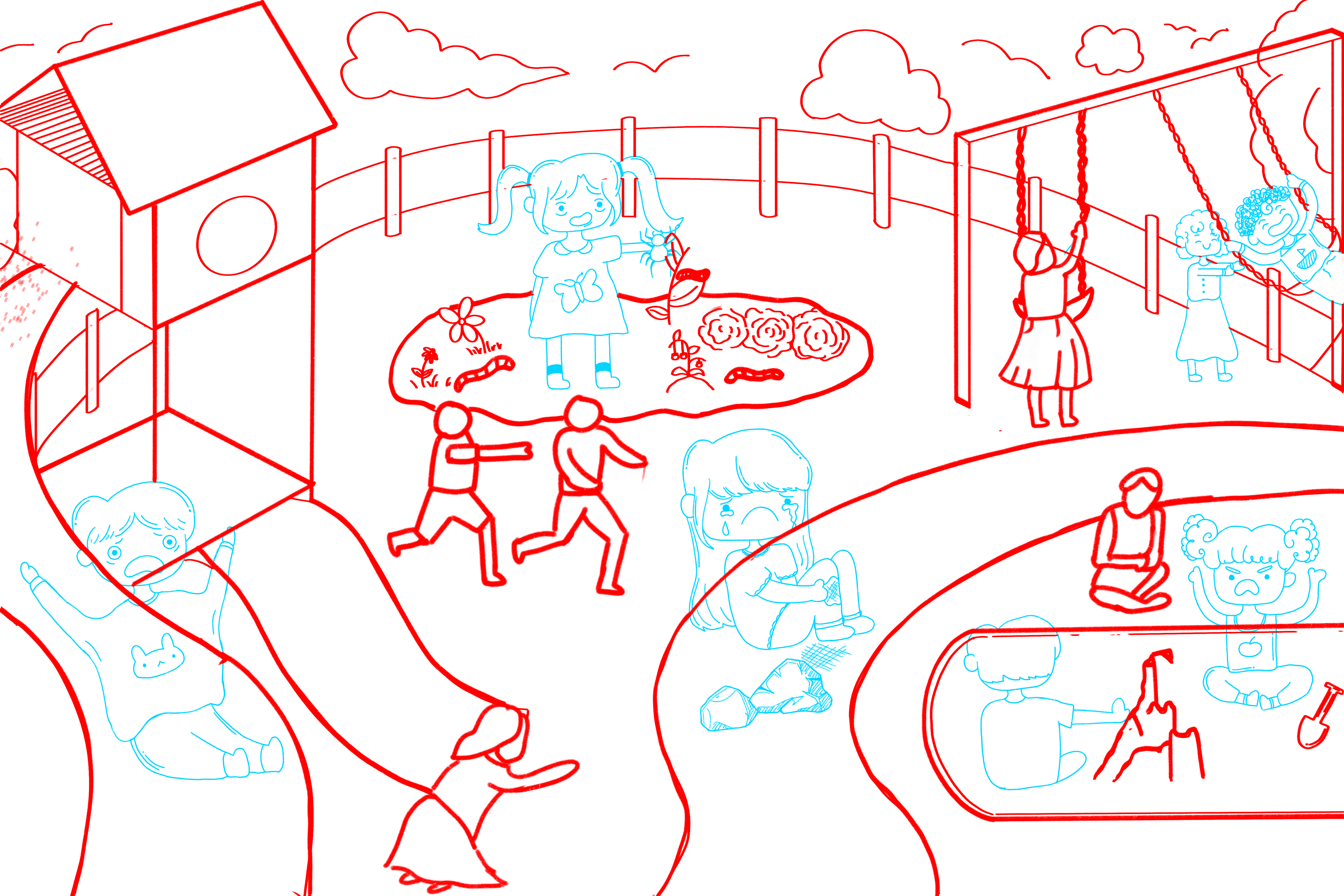
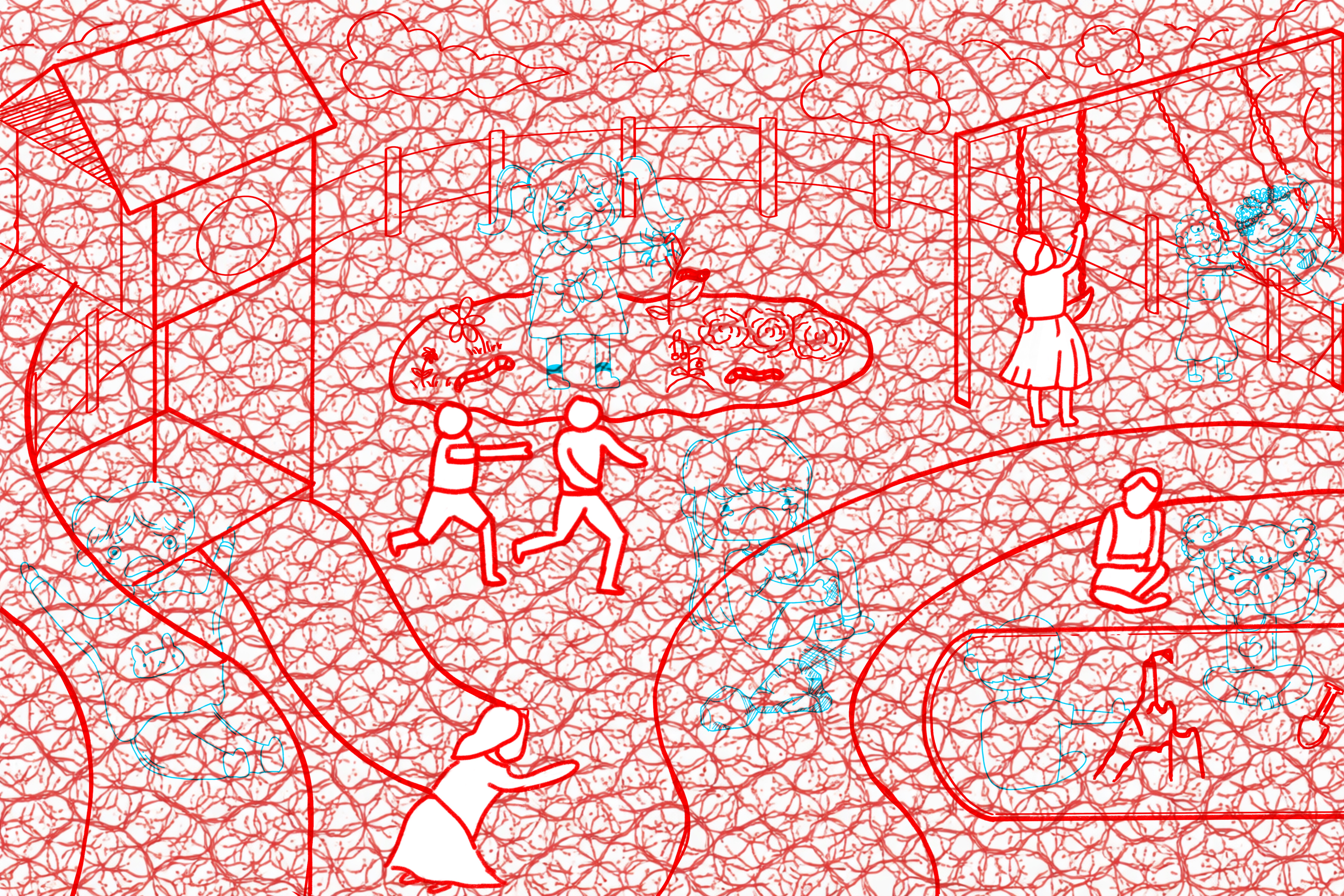
The same scene covered by the red scribble layer - visitors scan with the lens to reveal what's hidden beneath.
How it works
Move the x-ray lens to reveal hidden contexts
The handheld red lens filters out the scribble layer, revealing illustrated emotional scenes beneath. Visitors explore freely - there's no prescribed path, so every family's experience is different.
Stickers capture emotional reasoning
A sticker collecting card lets children label the emotions they discover and where they found them. The physical act of placing a sticker marks a moment of connection between a context and a feeling.
Drawing card extends the experience
A take-home drawing card asks visitors to create their own "hidden emotion" scenario - a character whose feeling isn't visible on the surface. This extends the core idea of the exhibit beyond the museum visit.

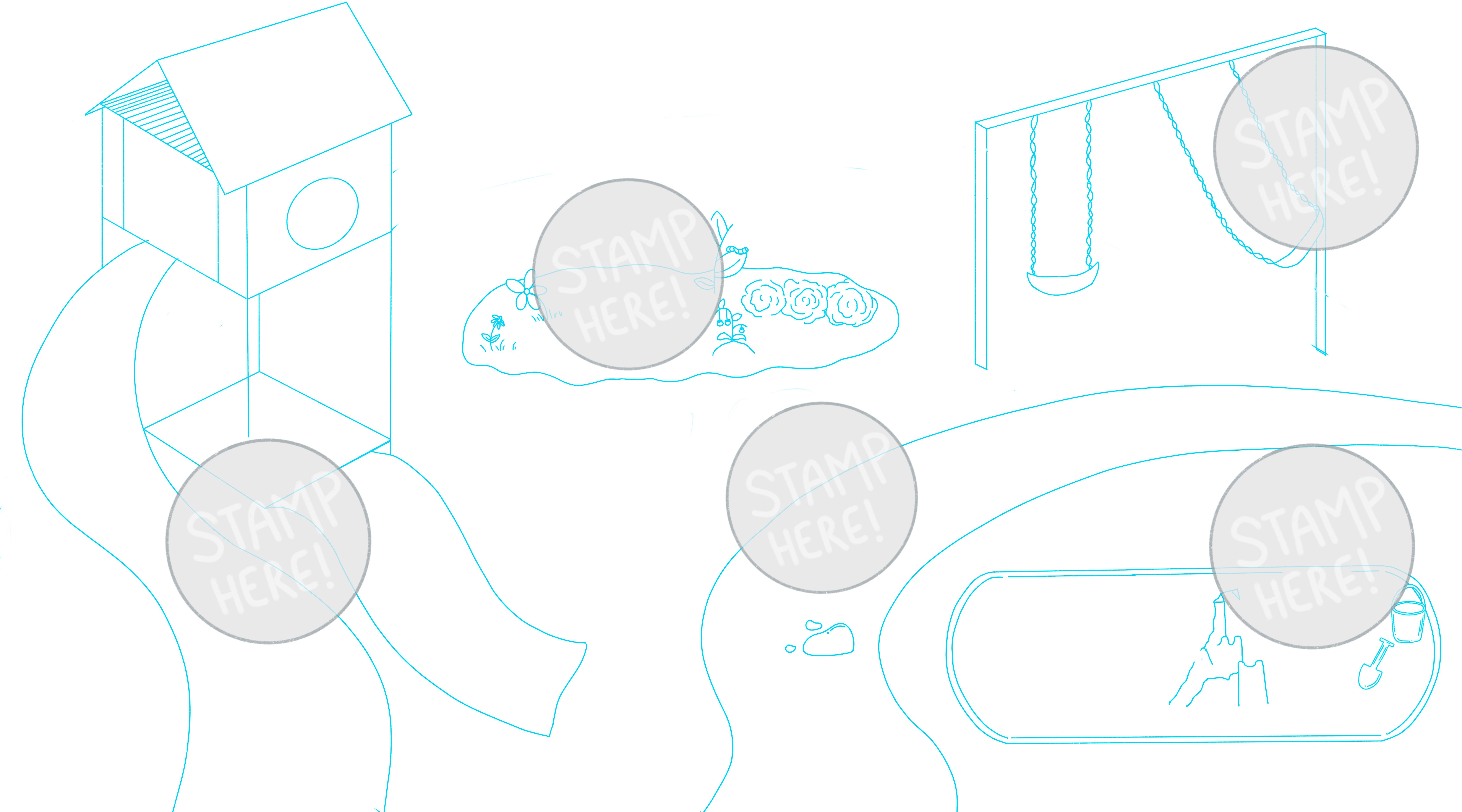
The handheld red lens (left) and the sticker collecting card (right) - two physical objects that structure the interaction.
Carnival testing - does the interaction work?
We brought an early prototype to CMU Carnival - a large outdoor event with families and children - for a first round of usability testing. The goal was simple: can children figure out how to use the lens, and does the scanning interaction feel engaging?
8 family groups (approx. 8–12 participants) interacted with the exhibit. Most children picked up the lens intuitively and found it immediately engaging. But a clear pattern emerged: children named emotions ("she looks sad") rather than explaining their causes. The hidden context was present, but children weren't connecting it to the emotional state.
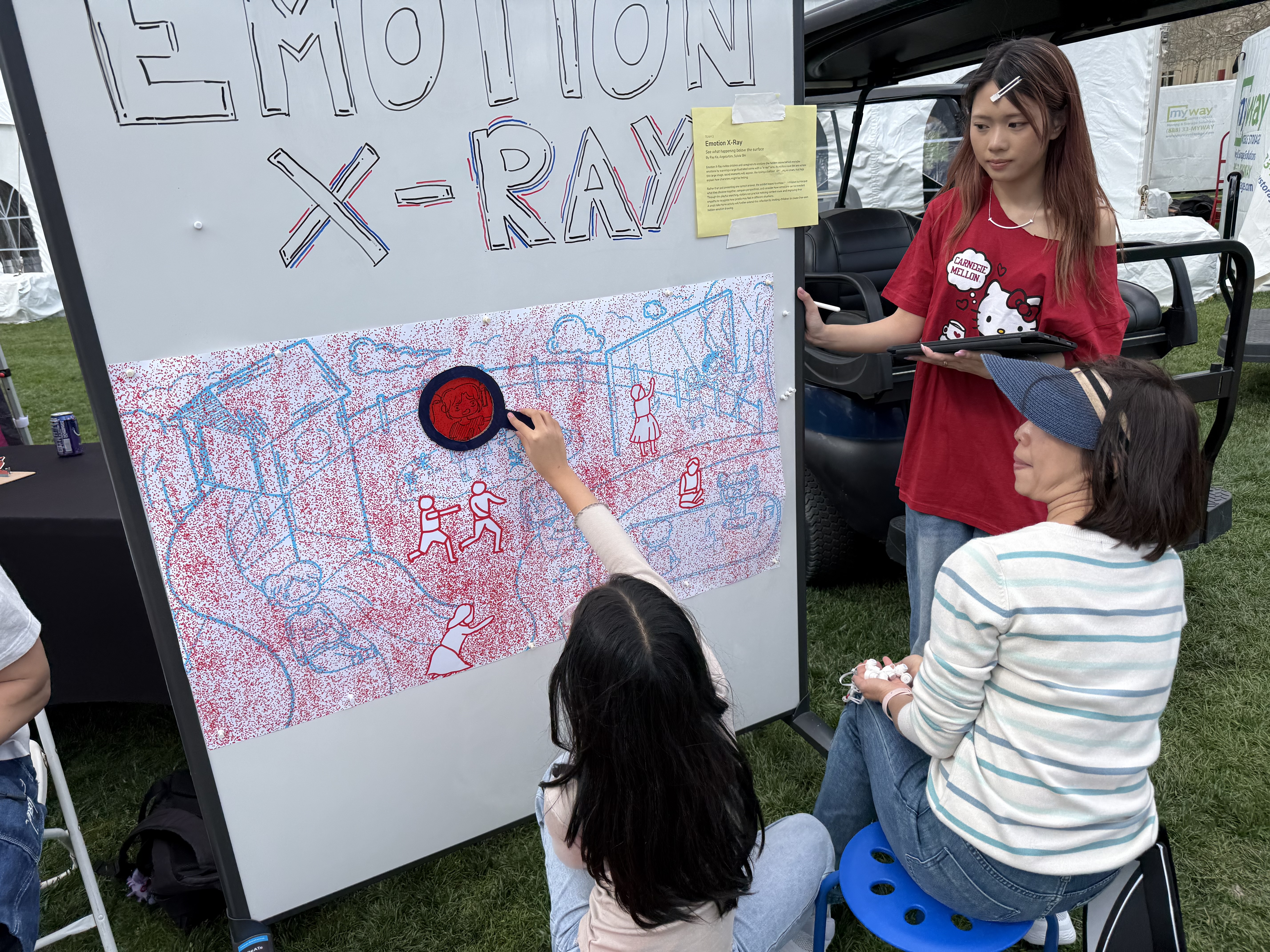
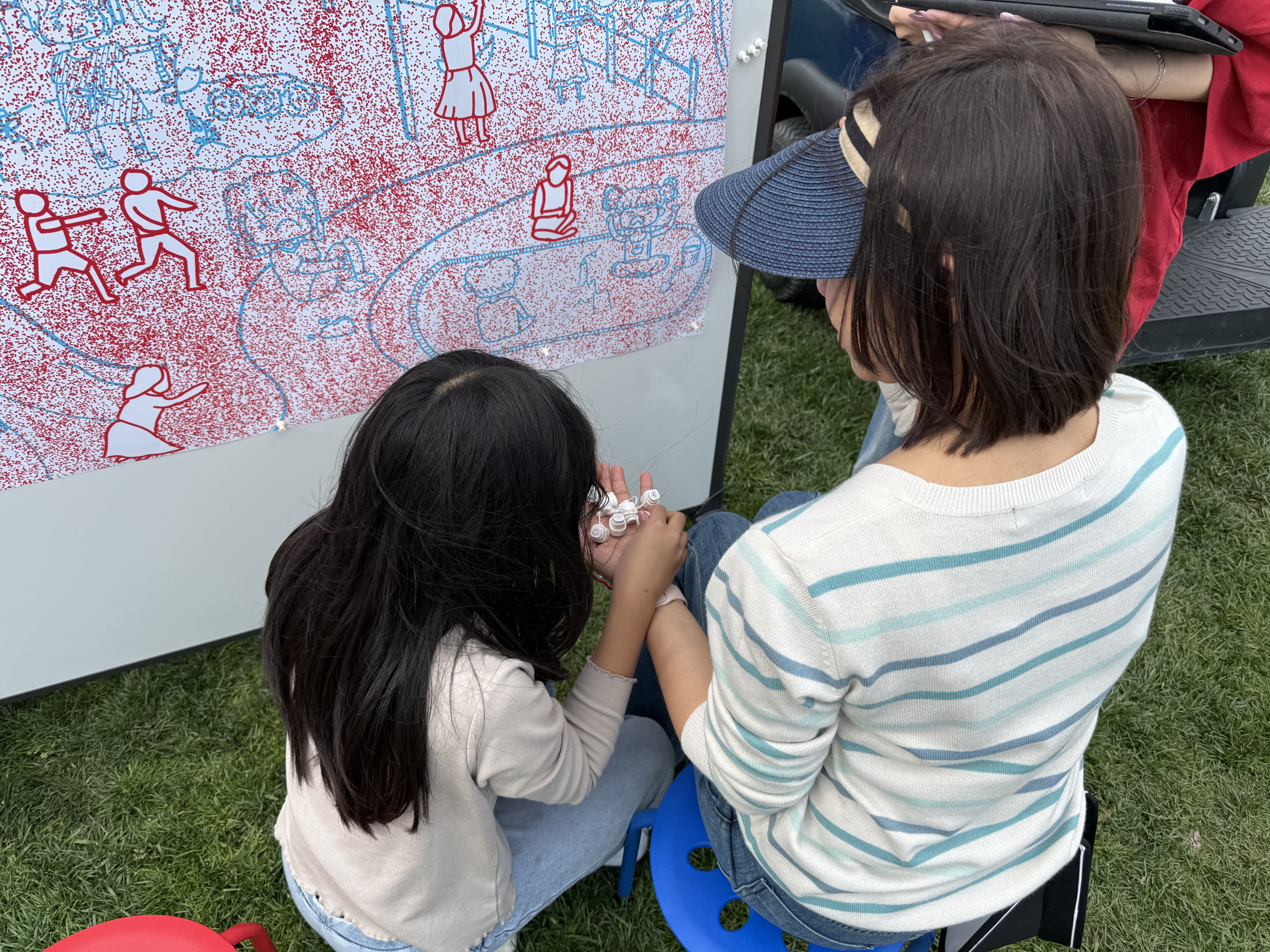
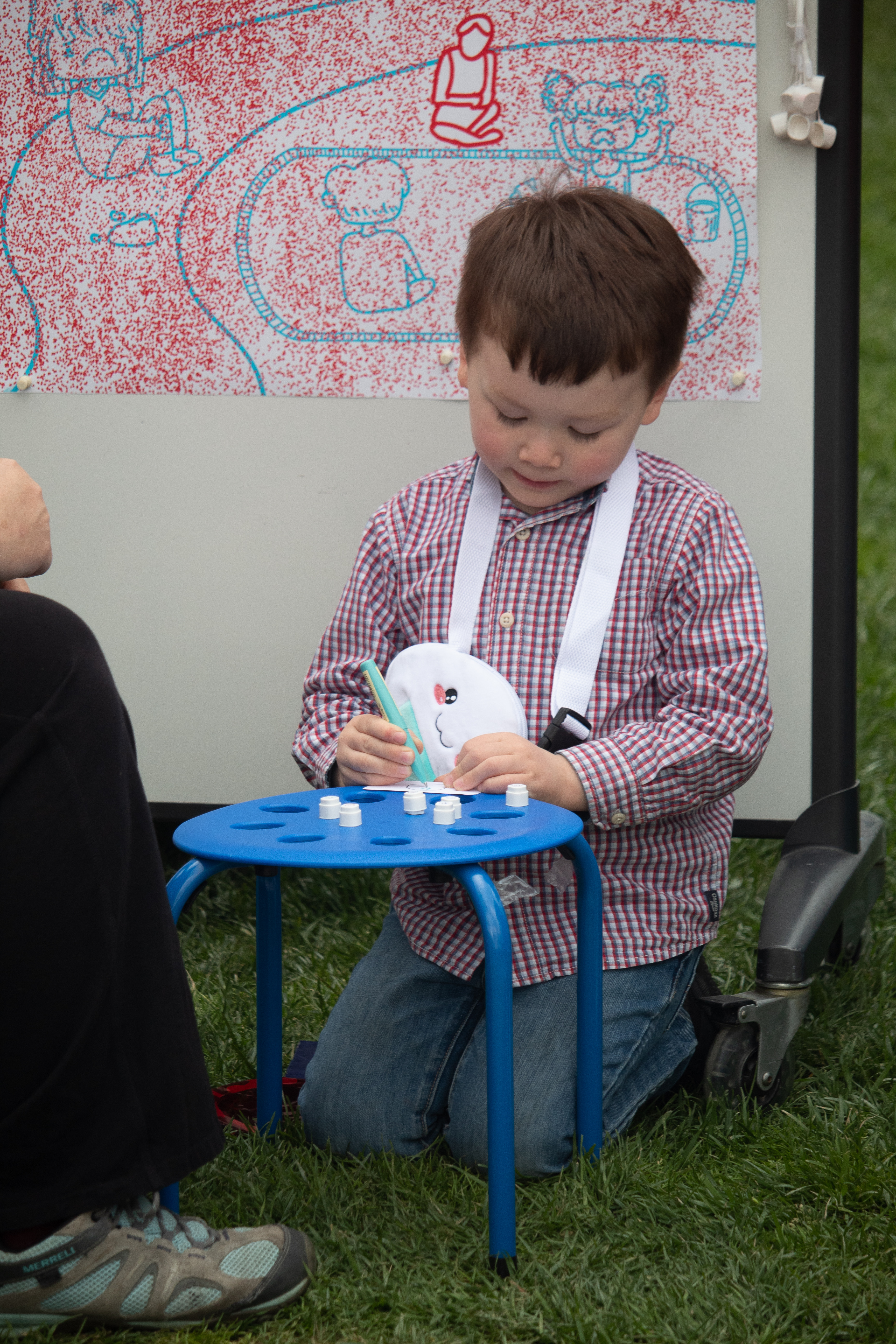
Carnival prototype testing - children and caregivers exploring the exhibit together.
What we changed
Museum session - does the exhibit teach social awareness?
The refined exhibit was evaluated at the Children's Museum of Pittsburgh with 8 family groups (ages 2–8). This round focused on a deeper question: do children use the exhibit to reason about emotional causes, or do they stay at the level of emotion identification?
We used structured observations and short exit interviews. Observers tracked whether children connected hidden contextual clues to emotional explanations, how caregivers shaped the experience, and how long groups stayed engaged.

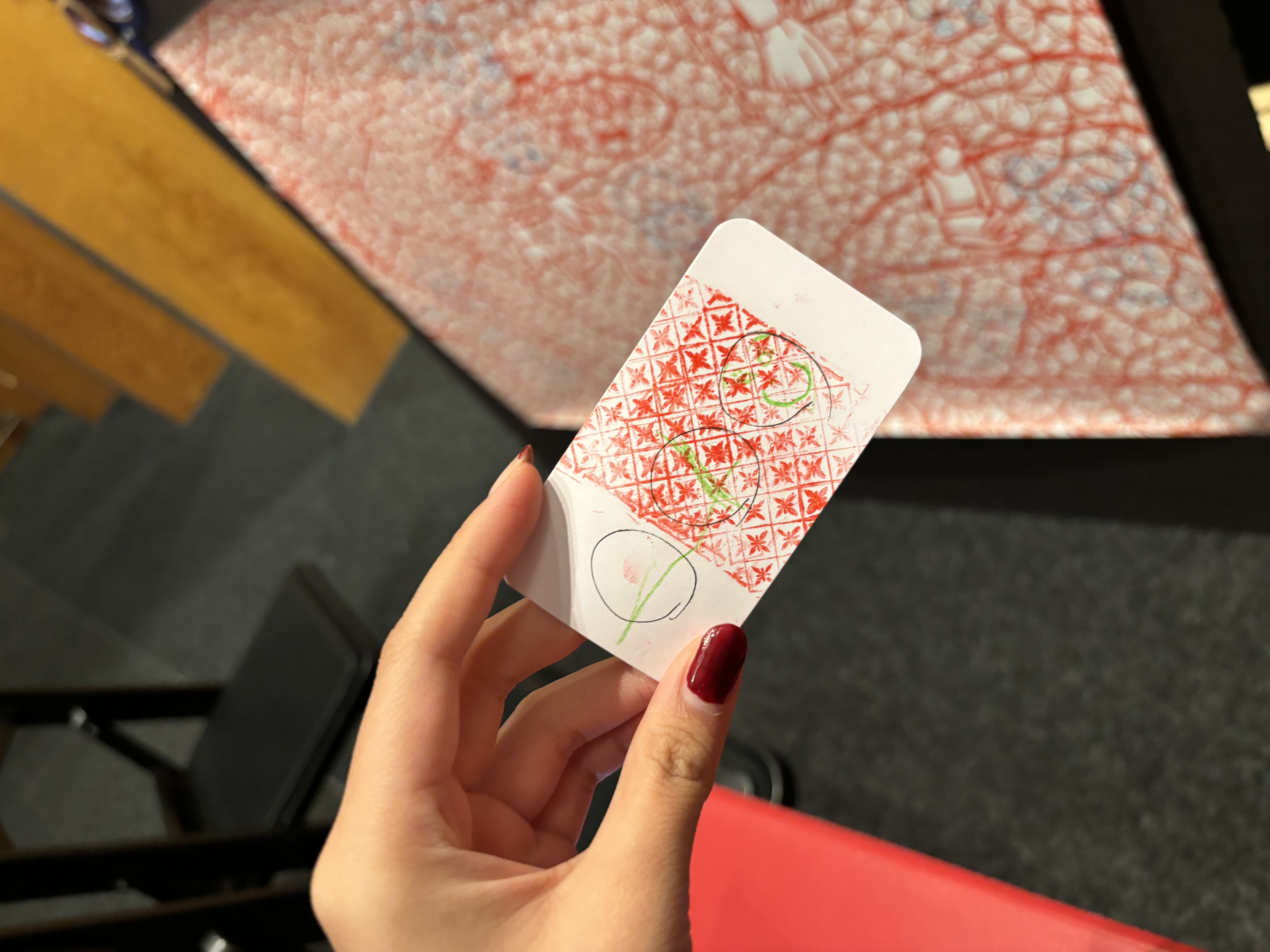
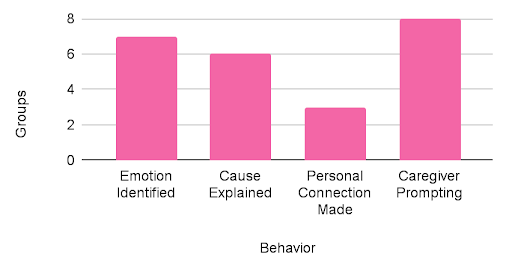
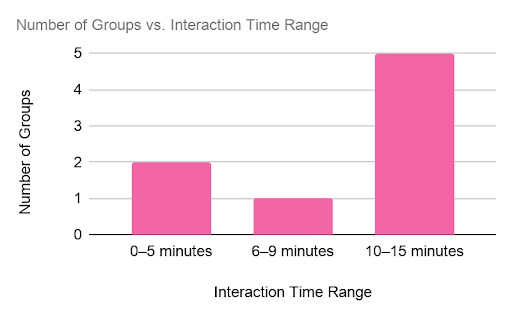
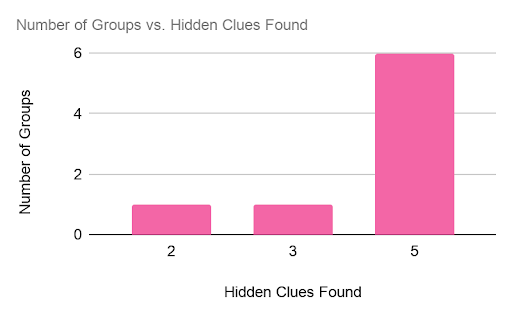
Left: most groups stayed engaged for 10–15 minutes. Right: 6 of 8 groups found all 5 hidden scenes.
Key findings
Hidden context does shift emotional reasoning
Children who initially gave surface-level emotion labels revised their interpretations after discovering hidden scenes. The lens mechanic successfully directed attention toward causes, not just expressions.
Caregiver prompting was the most consistent scaffold
All 8 groups showed caregiver prompting - parents asked follow-up questions, named feelings, and encouraged deeper interpretation. The exhibit reliably activated adult scaffolding, which in turn supported deeper reasoning in younger children.
Difficulty varied significantly by age
Younger children (2–4) needed more caregiver support; older children (7–8) completed the scanning quickly. A single difficulty level couldn't serve both equally - a future design would benefit from layered complexity.
What the exhibit is good at - and where it can go further
Emotion X-Ray succeeds at getting children engaged and physically exploring. The reveal mechanic is intuitive, satisfying, and motivates extended interaction. Children naturally begin asking "why" - which is the core SEL behavior the exhibit targets.
The main gap is that deeper reasoning doesn't always happen spontaneously. Children who needed more guidance didn't always get it from the exhibit itself - they relied on caregivers. A future iteration would build more interpretive scaffolding into the exhibit design: prompting cards, layered contextual clues, or facilitated group discussion.